
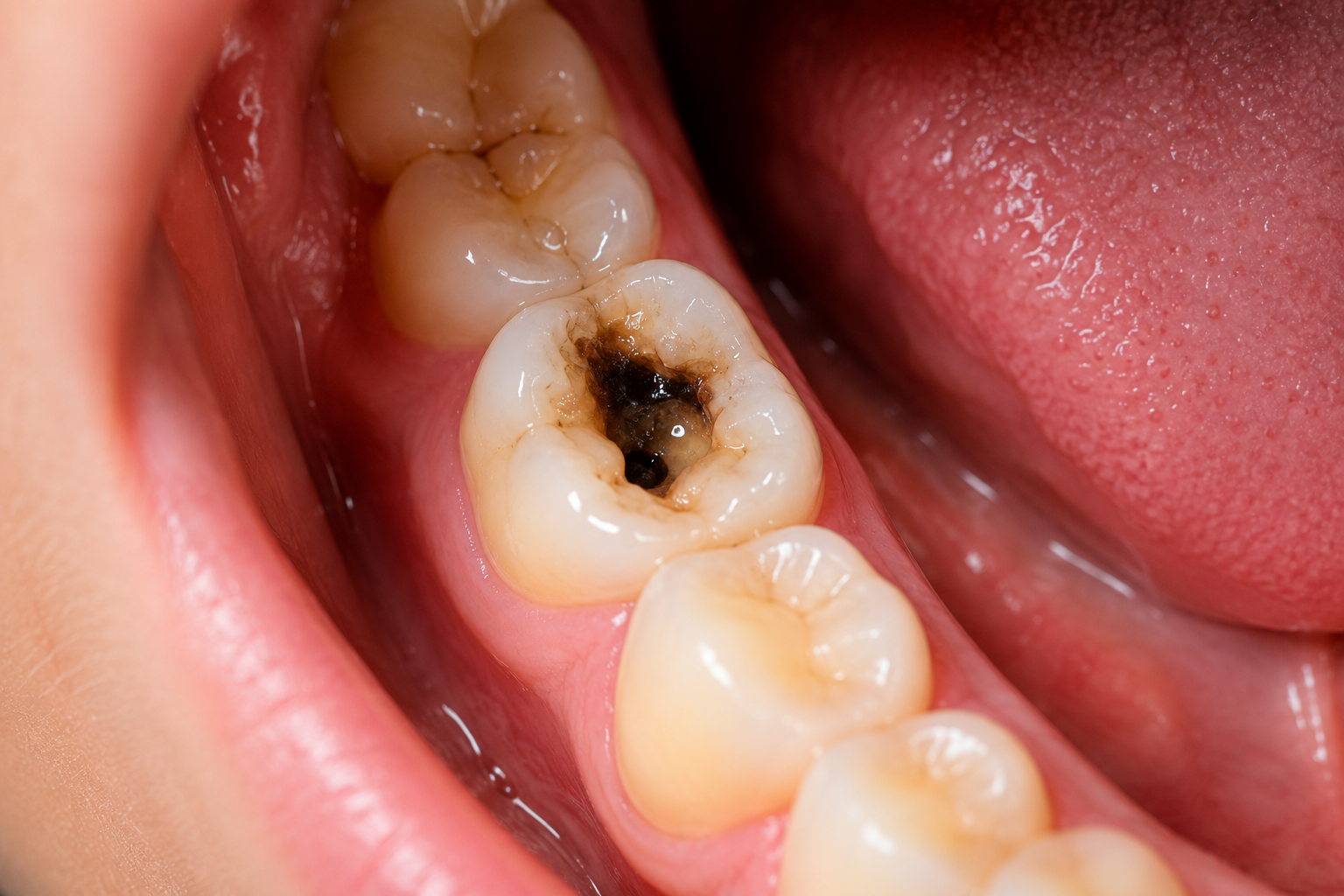
Cavities, also called tooth decay, are among the most common dental problems we see at Bharti Dental Care. They develop gradually as acids produced by plaque bacteria wear away at the tooth’s enamel, and catching them early usually means a simpler, more comfortable treatment.
Common Causes of Cavities and Tooth Decay
- Plaque buildup – a sticky film of bacteria constantly forms on the teeth and produces acid after you eat or drink, which gradually wears away enamel.
- Frequent sugary or starchy food and drink – sugar and refined carbohydrates feed the bacteria that cause decay, especially with frequent snacking.
- Inconsistent brushing and flossing – missed spots allow plaque to harden and keep producing acid against the tooth surface.
- Dry mouth – saliva helps neutralize acid and wash away food particles, so reduced saliva flow increases decay risk.
- Worn or weakened enamel – older fillings, enamel erosion or naturally thinner enamel can make teeth more vulnerable.
How to Help Prevent Cavities
- Brush twice daily with a fluoride toothpaste and floss once a day to remove plaque between teeth.
- Limit frequent sugary snacks and drinks, and avoid sipping on sugary beverages throughout the day.
- Ask your dentist about professional fluoride treatments or sealants if you are at higher risk of decay.
- Stay hydrated and chew sugar-free gum to help maintain healthy saliva flow.
- Keep up with regular dental check-ups and cleanings so early decay can be caught before it spreads.
When to See a Dentist
A dull ache, sharp pain when eating something sweet, cold or hot, or a visible dark spot or hole in a tooth are all signs it is time for a check-up. Left untreated, decay can progress deeper into the tooth. Our team can assess the extent of the damage during a General Dentistry visit, and if decay has reached the inner nerve of the tooth, Root Canal Treatment may be recommended to save the tooth.
Frequently Asked Questions
Can a cavity heal on its own?
No. Once the enamel has broken down, the tooth cannot repair itself and the cavity will not go away without treatment. Good oral hygiene can help stop it from progressing further, but a dentist needs to treat the decay that’s already there.
Does a cavity always hurt?
Not necessarily. Early-stage cavities often cause no pain at all, which is why regular check-ups are important. Pain usually develops as the decay gets closer to the nerve inside the tooth.
Is sugar the only cause of cavities?
Sugar is a major contributor, but decay also depends on how often you eat, how well you clean your teeth, saliva flow and the strength of your enamel. Two people with similar diets can have very different cavity risk.
What happens if a cavity is left untreated?
Untreated decay can spread deeper into the tooth, potentially reaching the nerve and causing an infection or abscess. Treating a cavity early is usually simpler and more comfortable than waiting until it becomes painful.
Think you might have a cavity? Our dentists can assess your teeth and recommend the right treatment early.
