
A brighter smile is one of the most requested cosmetic treatments at Bharti Dental Care, and the most common question we hear is simple: is teeth whitening actually safe? Here is what happens during professional whitening, what the evidence says, and how it differs from home remedies.
How Professional Teeth Whitening Works
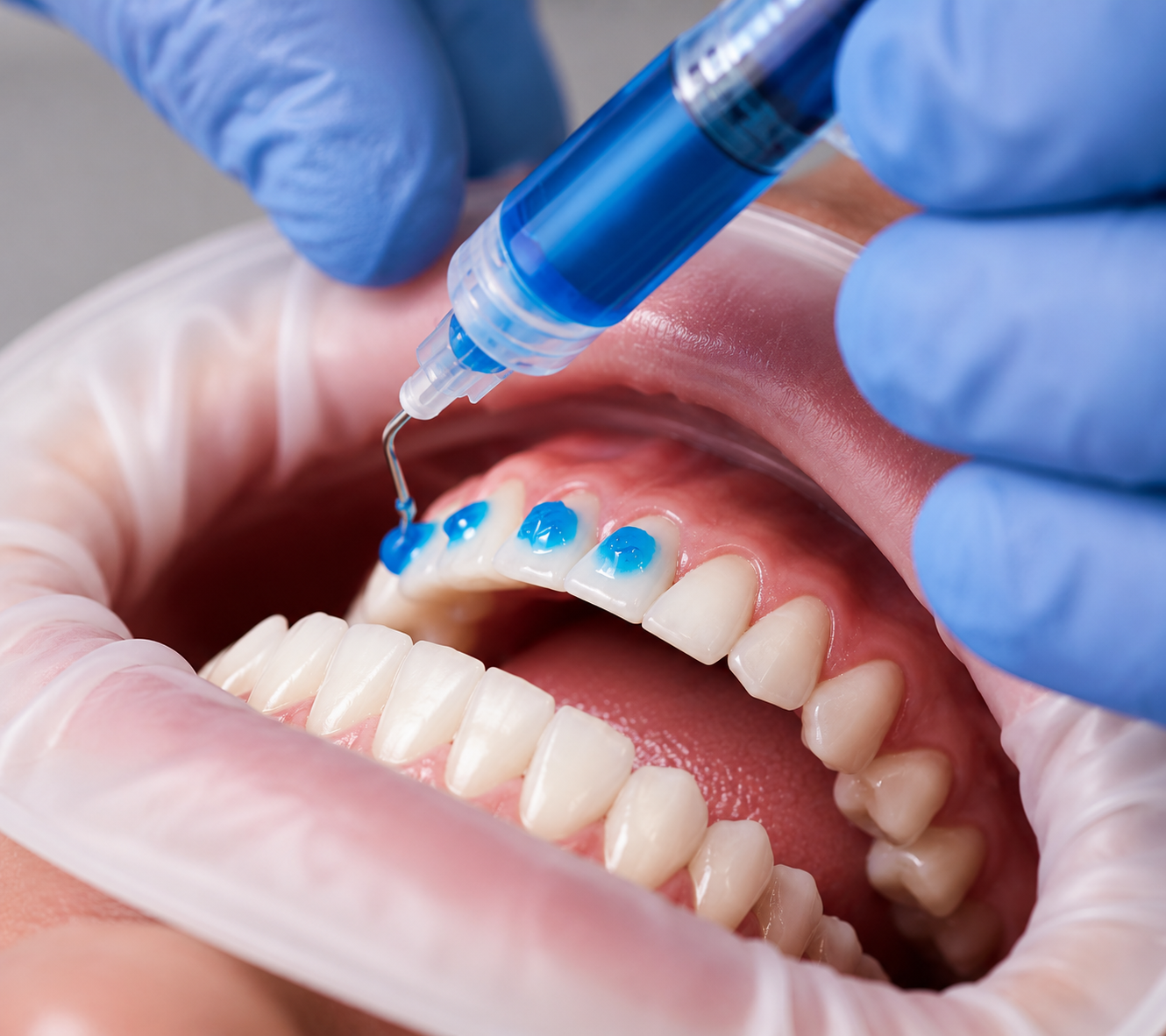
In-clinic whitening uses a carefully measured bleaching gel, usually based on hydrogen or carbamide peroxide, that is applied directly to the teeth under the supervision of a dentist. The gum tissue is protected first, and the gel is often activated with a special light to speed up the process. Most patients see noticeably brighter teeth in a single visit lasting about an hour.
Is It Safe?
When performed by a trained dental professional, teeth whitening is considered a safe, well-studied cosmetic procedure. Safety comes from three things working together:
- Professional-strength gel used at a concentration that is safe for enamel when applied correctly
- A dentist checking for cavities, cracks or gum disease beforehand, since whitening over untreated problems can cause pain
- Gum and soft tissue protection throughout the procedure to prevent chemical burns
Possible Side Effects
- Temporary tooth sensitivity to hot or cold for a day or two after treatment
- Mild gum irritation that usually resolves quickly
- Uneven results if whitening is done without professional guidance, especially around existing crowns or fillings, which do not change colour
Professional Whitening vs At-Home Kits
Over-the-counter strips and kits use much lower concentrations of bleaching agent and are not customised to your teeth, so results are typically slower and less even. Professional whitening at a clinic such as Laser Dentistry allows the strength of treatment to be tailored to your teeth while keeping the gums protected throughout.
Frequently Asked Questions
How long do whitening results last?
Results typically last from several months up to two to three years depending on your diet and oral hygiene habits, with coffee, tea, red wine and smoking causing faster staining.
Does whitening damage tooth enamel?
Professional whitening performed correctly does not damage enamel. Sensitivity is usually temporary and resolves within a day or two after treatment.
Can everyone get their teeth whitened?
Most adults are good candidates, but whitening is not recommended during pregnancy, for children under 16, or for teeth with untreated decay or cracks, which is why a dental check-up comes first.
Curious if whitening is right for you? Our dentists can assess your teeth and recommend the safest way to brighten your smile.
